We have recently had an uptick in false CO alarms. What we are finding is that the devices are either signaling because of low battery, malfunction, or end of life and being confused with the signal for the presence of CO gas.
Be aware of what the “chirps” mean.
Carbon monoxide detectors can be battery operated or plug in to an outlet. Most devices are good for 5 to 7 years from initial power up, with some claiming a life span of 10 years. If you are unsure when the device started being used, go off the manufacture date printed on the back of the device. Be aware of how old your device is and if it is close to needing replacement. It is recommended to replace these devices every 5 years to be safe.
Test all smoke and CO detectors when you come back from vacation. Especially in vacation properties that are not used for extended periods of time. During your time away, you may have missed the signals of the device for low batteries, malfunction, or end of life and the device doesn’t work at all.
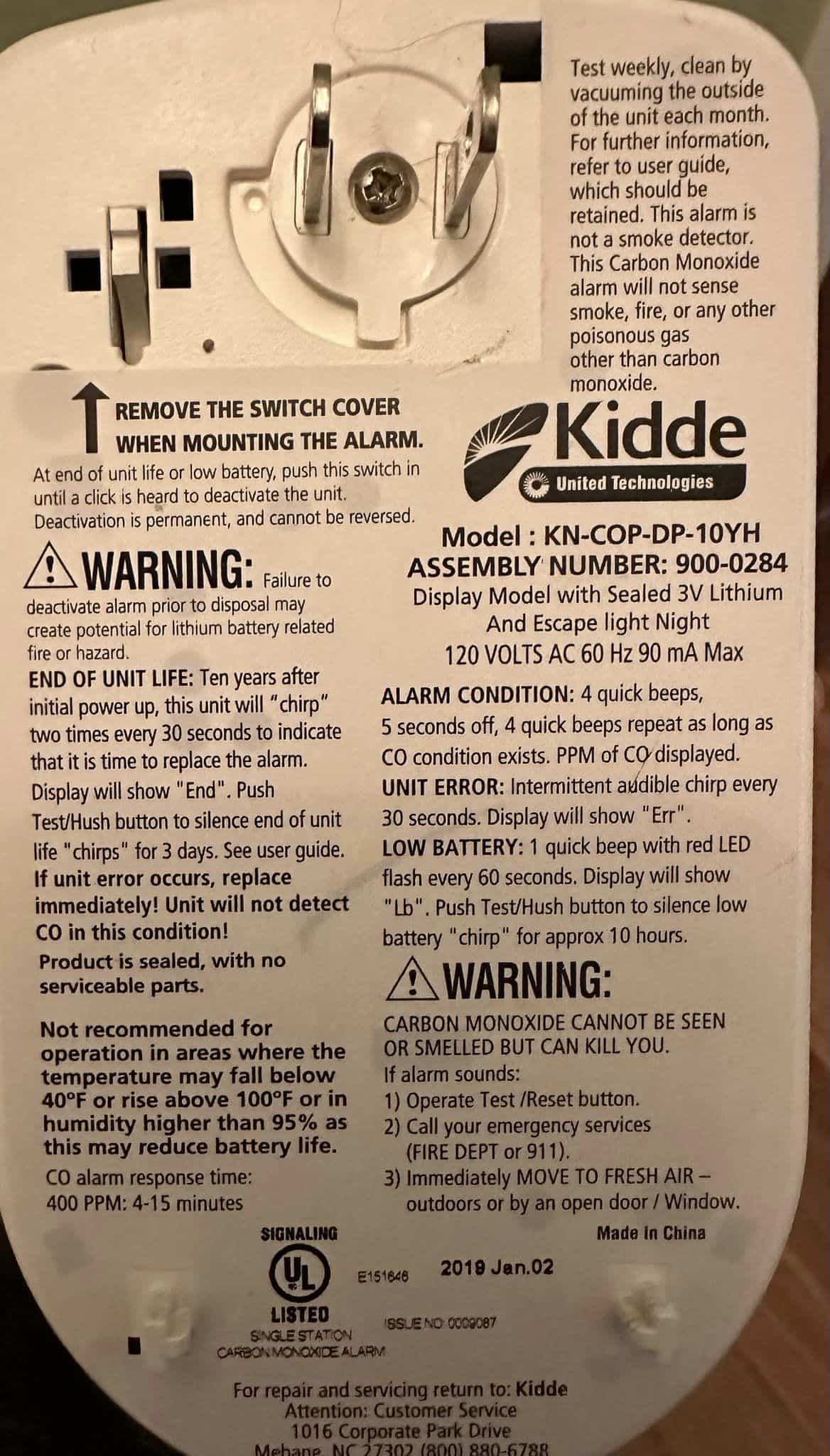
Read what the signals mean for your device. As you can see in the images below, the signals vary between manufacturers and type of device.
???? For the Kidde detector, this plugs into an outlet with a battery back up and digital display. For end of life, two “chirps” are heard every 30 seconds and the display will show “End.” This differs from an alert for the presence of CO where you would hear 4 quick beeps every 5 seconds.
???? The First Alert device is battery operated with no digital display. As you can see in the picture, the number of “chirps” heard per minute notifies you of low battery, device malfunction, end of life and presence of CO.
When alerted of low battery, malfunction, or end of life by your CO device, don’t put off replacing. These alerts mean the device is not going to be reliable for detecting the presence of CO. Keep your family safe and replace the device in a timely manner.